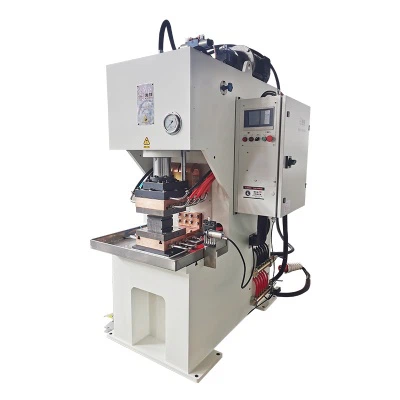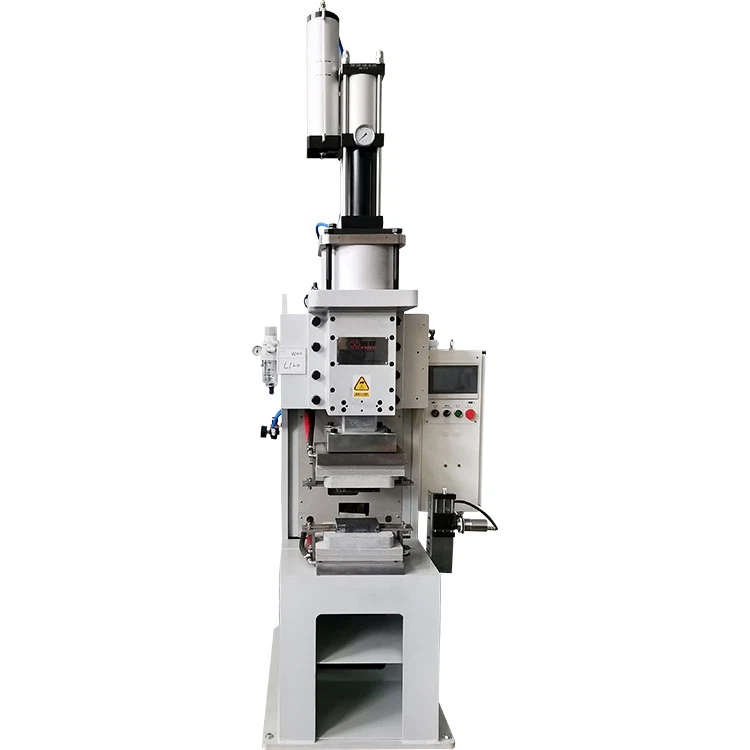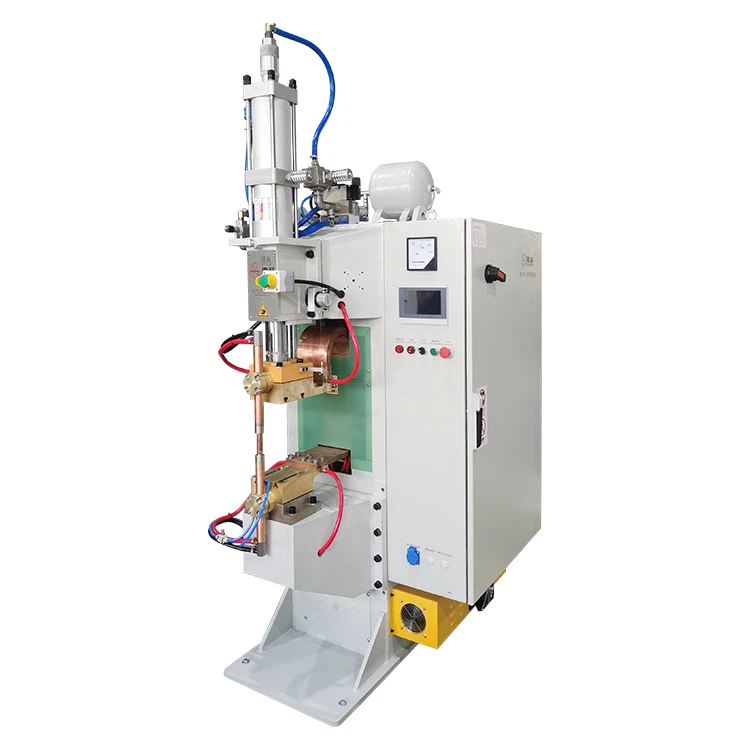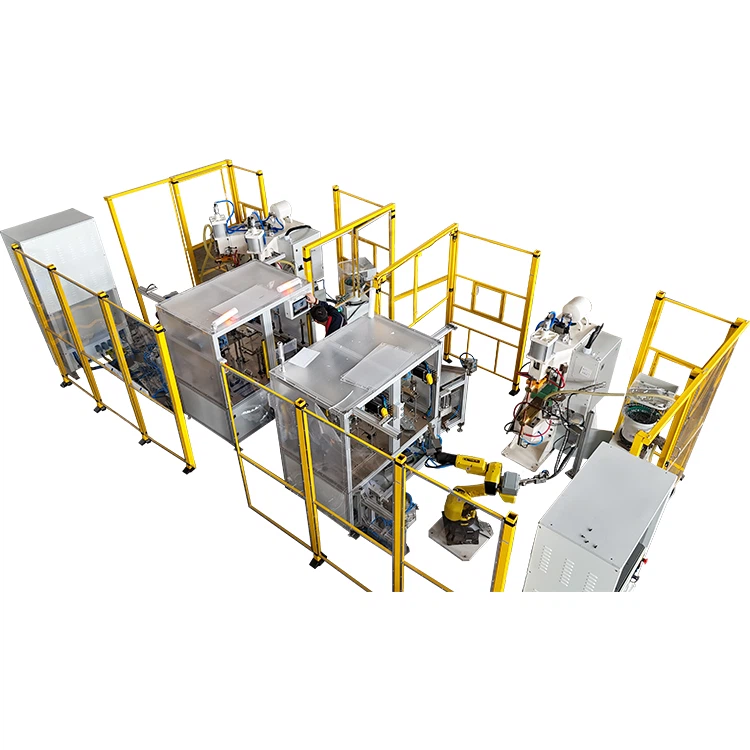

A new energy vehicle battery factory reduced single-weld energy consumption by 28% by upgrading the capacitor bank module of their . Conversely, an aerospace manufacturer saw a 40% drop in weld qualification rate for titanium alloy cabins due to an electrode system design flaw. These cases reveal that the performance of a depends directly on the synergistic work of its key components. As industrial equipment integrating high-energy pulse technology (instantaneous current up to 100kA) and (positioning accuracy ±0.01mm), its core components span three major systems: the , . This article provides an in-depth analysis of the technical characteristics and selection criteria for six core components.
I. Capacitor Bank Module: The Energy Storage Core
Capacitance Range: Industrial Grade 10-200mF; Military Grade 50-500mF.
Voltage Rating: Industrial 450-2000VDC; Military 600-3500VDC.
<5mΩ; Military <2mΩ.
Cycle Life: Industrial 500,000 cycles; Military 1,000,000 cycles.
Best Practice: A new energy company used bipolar aluminum electrolytic capacitor banks (120mF ±1%), achieving 98% energy release within 0.3ms.
Modular Design Advantages: Supports parallel expansion (up to 32 groups per machine); Intelligent voltage balancing (voltage difference <0.5%); Fault isolation mechanism (single group failure doesn't affect system).
II. Electrode System: The Energy Release Terminal
Chromium Zirconium Copper (CuCrZr): Conductivity 85% IACS, Softening Temp 550℃, for general metals.
Tungsten Copper (WCu): Conductivity 45% IACS, Softening Temp 1200℃, for high-melting-point alloys.
Dispersion-Strengthened Copper (Al₂O₃-Cu): Conductivity 90% IACS, Softening Temp 600℃, for precision electronics.
Case Study: A 3C electronics firm used gradient composite electrodes (tip: CrZrCu / base: CuW), increasing electrode life from 50,000 to 250,000 cycles.
Servo Drive System Parameters: Maximum Force 3000N; Response Time <=5ms; Repeatable Positioning Accuracy ±0.005mm.
Upgrade Example: An auto parts plant adopted a linear motor drive system, increasing pressing speed to 200mm/s and welding efficiency by 40%.
III. Energy Control Unit: The Precision Discharge Brain
Voltage Rating: Industrial Grade 1700V; Custom Module 3300V.
Peak Current: Industrial 50kA; Custom 100kA.
Switching Speed: Industrial 0.5μs; Custom 0.2μs.
Military-Grade Protection: Dual overcurrent protection (hardware + software); Active current sharing control (current deviation <3%).
Waveform Modulation Capabilities: Free switching between single-pulse/multi-pulse modes; Pulse width adjustment accuracy: ±0.01ms; Pulse interval adjustment range: 1-100ms.
Application: An aerospace manufacturer used a dual-peak pulse waveform (leading pulse + main pulse), increasing titanium alloy weld penetration to 1.2mm.
IV. Power Supply Module: The Energy Input Channel
- High-Frequency Charging Power Supply Parameters
Parameter Examples: Charging Power 10-50kW; Charging Efficiency >=95%; Ripple Factor <0.5%; Response Time <10ms.
Intelligent Charging Strategy: Automatic Constant Current-Constant Voltage switching; Temperature-compensated charging (-20℃ to 60℃).
Case Study: A heavy industry enterprise installed a supercapacitor buffer module (15F), reducing grid inrush current by 80% and increasing power factor to 0.99.
V. Cooling System: Thermal Management Guarantee
- Dual-Cycle Cooling Architecture
Water Cooling System Technical Indicators: Flow Rate 6-12 L/min; Pressure Loss <0.2MPa; Temperature Control Accuracy ±1°C.
Innovation: A battery company introduced phase change material (PCM) cooling plates, stabilizing capacitor bank operating temperature at 45±3℃.
Forced Convection Parameters: Wind Speed 8-15m/s; Static Pressure 800-1500Pa; Airflow Efficiency >85%.
VI. Structural Frame: The Precision Mechanical Foundation
- C-Frame Mechanical Performance
Parameters: Static Stiffness >=500 N/μm; Dynamic Resonance Frequency >=80 Hz; Repeatable Positioning Accuracy ±0.01mm.*
Multi-layer Insulation Design:
Electrode Arm: Insulation Class F, Withstands 3kV/1min.
Capacitor Chamber: Insulation Class H, Withstands 5kV/1min.
Control Cabinet: Insulation Class B, Withstands 2kV/1min.
A leading power battery company reduced capacitor bank replacement time from 4 hours to 15 minutes through modular upgrades. A precision electronics firm achieved a first-pass yield of 99.998% after optimizing the electrode system. Data indicates that technological breakthroughs in core components can increase the comprehensive efficiency of a by over 50%. With new technologies like silicon carbide power devices and liquid metal electrodes, future welders will evolve towards *ultra-fast charge/discharge (<0.1ms), intelligent self-recovery, and energy recycling*, opening a new era in precision manufacturing.