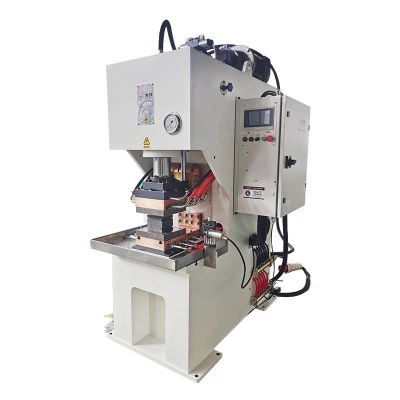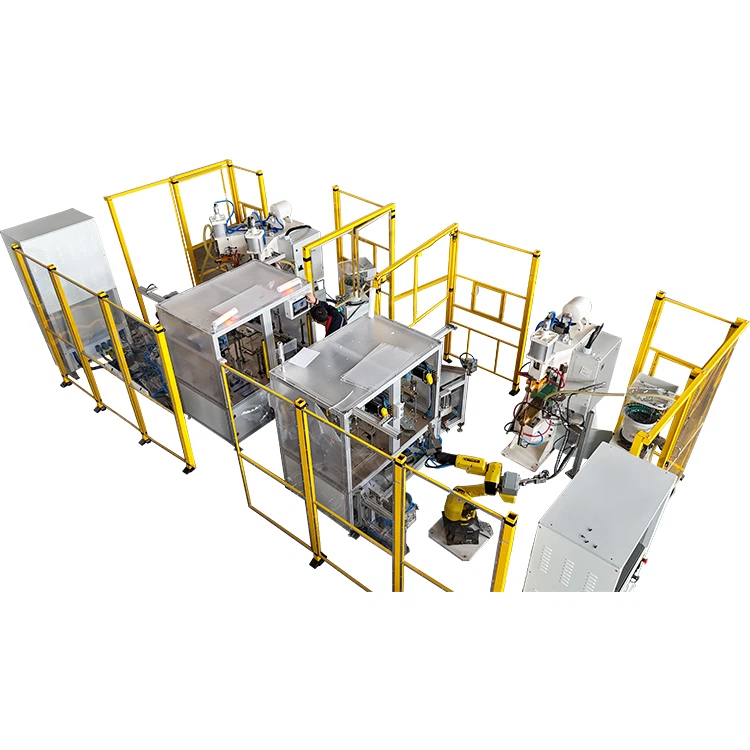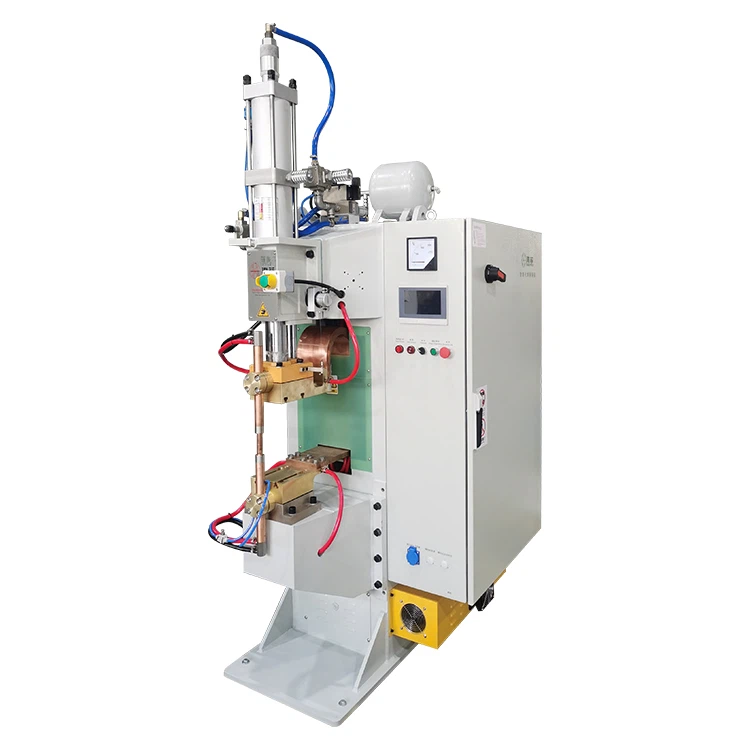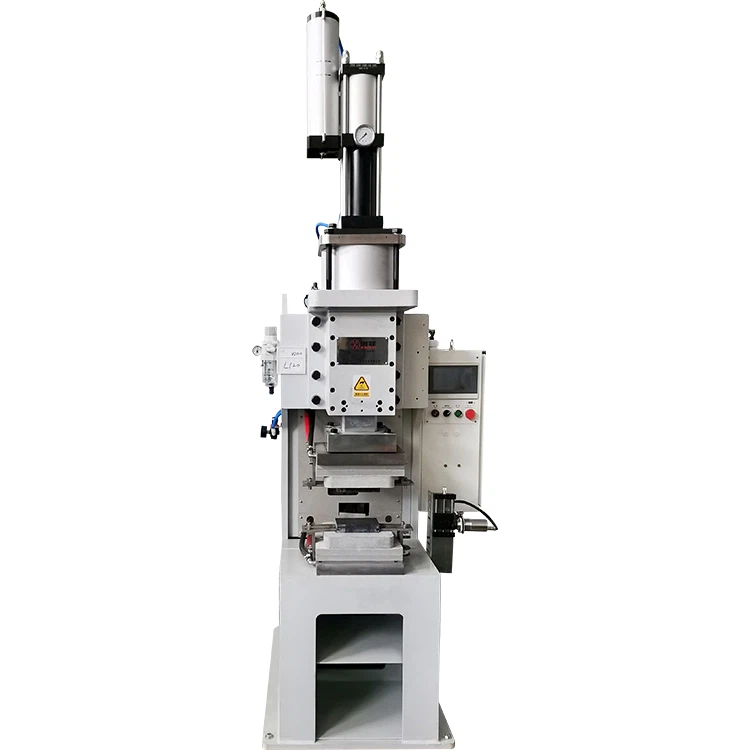

In 2023, a deviation of just 0.5kN in electrode pressure setting at a new energy battery plant caused a 12% surge in poor tab welding rates for their equipment. Conversely, an aerospace manufacturer achieved a stable welding pass rate of 99.99% through standardized operating procedures. These cases reveal that the standardized operation of machines is crucial not only for weld quality but also directly impacts equipment lifespan and production safety. As high-precision equipment capable of millisecond-level discharge control (accuracy ±0.1ms) and kiloampere-level instantaneous current, its operation must adhere to three core principles: precise parameter matching, process standardization, and real-time monitoring. This article systematically analyzes six core operating standards and seven key precautions.
I. Standard Equipment Start/Stop Procedure
- Pre-start Checklist
Capacitor Bank Voltage: Standard - <=1% of nominal value error; Tool - 0.1-grade digital multimeter.
Electrode Alignment: Standard - <=0.05mm deviation; Tool - Laser alignment instrument.
Coolant Level: Standard - Level line ±5mm; Tool - Visual level gauge.
*Best Practice: An auto parts plant implemented a "Three-Check, Three-Confirm" system, reducing startup failures by 82%.*
Power on & preheat (10min) → Self-test program run → Parameter loading → No-load test (3 times) → First-article verification.
*Key Parameters: Preheat Temperature: 25±2℃ (Capacitor Bank); No-load Test Voltage: 30% of nominal value.
II. Welding Parameter Setting Standards
Charging Voltage (V=√(2E/C), Adjustment Step: ±5V)
Discharge Time (t=K×(T1+T2), Adjustment Step: ±0.1ms)
Electrode Pressure (P=σ×A×1.2, Adjustment Step: ±50N)
(Where E is welding energy, C is capacitance, T is material thickness, σ is material yield strength, A is contact area.)
- Material-Parameter Matching Table:
Aluminum-Aluminum: Voltage 450-600V, Squeeze Time 12-18ms, Hold Time 30-40ms.
Galvanized Steel-Copper: Voltage 800-1000V, Squeeze Time 15-20ms, Hold Time 40-50ms.
Titanium-Stainless Steel: Voltage 1200-1500V, Squeeze Time 25-30ms, Hold Time 60-80ms.
III. Real-time Monitoring Key Points
Instantaneous Current: Normal Range - Nominal value ±5%; Alarm Threshold - ±10%; Action - Emergency Stop.
Electrode Temperature: Normal Range - <=180℃; Alarm Threshold - >=200℃; Action - Force Cool.
Pressure Fluctuation: Normal Range - <=±3%; Alarm Threshold - >=±8%; Action - Pause Pressing.
Non-Destructive Testing: Ultrasonic testing (defect resolution 0.1mm), Infrared thermography (temperature field uniformity analysis).
Best Practice: A defense contractor performs one metallographic check every 50 welds (requiring nugget diameter pass rate >=95%).
IV. Seven Safety Operation Prohibitions
- Prohibited: Live maintenance (must power off for 5 minutes and verify).
- Prohibited: Bypassing safety interlock devices.
- Prohibited: Overload operation (>30 cycles/minute continuously).
- Prohibited: Using non-standard electrode tips (diameter error >0.1mm).
- Prohibited: Touching the discharge circuit with bare hands (residual voltage >60V).
- Prohibited: Operation in excessive humidity (relative humidity >80%).
- Prohibited: Unauthorized parameter changes (requires engineer permissions).
V. Fault Emergency Response Plan
E101 (Capacitor Overvoltage): 1. Cut off charging circuit. 2. Activate discharge resistor. 3. Check voltage sensor.
E205 (Electrode Not Clamped): 1. Check pressure sensor. 2. Clean electrode surface. 3. Calibrate pressure system.
Hit emergency stop button → Cut off main power → Activate emergency cooling → Hang warning sign → Record fault details.
VI. Daily Maintenance Standards
Electrode Tip Dressing: Frequency - Every 5,000 cycles; Standard - End flatness <=0.02mm.
Capacitor Bank Check: Frequency - Monthly; Standard - Capacity decay <=5%.
Coolant Replacement: Frequency - Every 3 months; Standard - Conductivity <=50μS/cm.
Discharge Switch: Design Life - 500,000 cycles; Replacement Indicator - Contact resistance >5mΩ.
Pressure Sensor: Design Life - 100,000 hours; Replacement Indicator - Linearity deviation >1.5%.
A battery gigafactory implementing a standardized system reduced equipment failure rate from 1.2% to 0.03%, saving over 2 million CNY annually. Another precision electronics firm reduced weld quality variation by 80% with real-time monitoring. Practice proves that standardized operation can boost the comprehensive efficiency of machines by over 40%. With IoT and digital twin integration, the future points towards self-optimizing parameters, self-diagnosing faults, and self-reminding maintenance.